
.png)
Additional Question Bank
(Likert Scale: 1–5 Strongly Disagree → Strongly Agree)
All questions below follow the same response format:
To what extent do you agree with the above statement
1 = Strongly disagree
2 = Disagree
3 = Neutral
4 = Agree
5 = Strongly agree
1. Measuring control effectiveness
Use when a new system, process, structure, or initiative has been introduced.
- The new project management system enables us to work efficiently.
- The recent changes have improved how work is coordinated across teams.
- The new processes introduced are clear and easy to follow.
- The changes implemented have reduced unnecessary administrative burden.
- I understand why these changes were introduced.
- The changes have had a positive impact on my ability to perform my role.
2. Psychological safety
Use to assess whether staff feel safe to raise concerns or speak openly.
- I feel safe to speak up if something at work is not right.
- If I raise a concern, I believe it will be taken seriously.
- I can admit mistakes without fear of negative consequences.
- Different perspectives are genuinely valued in my team.
- I feel comfortable challenging decisions respectfully when needed.
3. Leadership & communication
Use to test clarity, consistency, and confidence in leadership direction.
- Leadership communicates decisions clearly and consistently.
- I understand the priorities of the organisation.
- I receive timely updates about changes that affect my work.
- There is consistency in how leaders communicate across the organisation.
- Leaders demonstrate genuine concern for employee wellbeing.
4. Workload & resourcing
Use to drill into job demands and sustainability.
- My workload is manageable within normal working hours.
- Expectations placed on me are realistic.
- I have sufficient resources to do my job effectively.
- Competing priorities are managed effectively.
- I have enough time to complete my work to a good standard.
5. Role clarity & accountability
Use when there are concerns about ambiguity or duplication.
- I have clear expectations about what is required in my role.
- I understand how my role contributes to broader organisational goals.
- Responsibilities are clearly defined within my team.
- Decision-making authority is clear in my area of work.
6. Support & escalation processes
Useful where incidents, complaints, or risk issues are present.
- I know how to report inappropriate or unsafe behaviour.
- There are clear processes for managing workplace issues.
- I am confident that workplace concerns are handled appropriately.
- I feel supported if I experience a challenging situation at work.
7. Engagement & commitment
Optional broader organisational health indicators.
- I feel motivated to do my best work.
- I would recommend this organisation as a good place to work.
- I intend to remain working here for the next 12 months.
- I feel valued for the work I do.
Brief Guide to Interpreting the Data
1. Look for patterns, not isolated scores
- Focus on items with <65% agreement (Agree + Strongly Agree).
- Pay close attention where ≥25% disagree (Disagree + Strongly Disagree).
- One low item alone matters less than clustered themes across related questions.
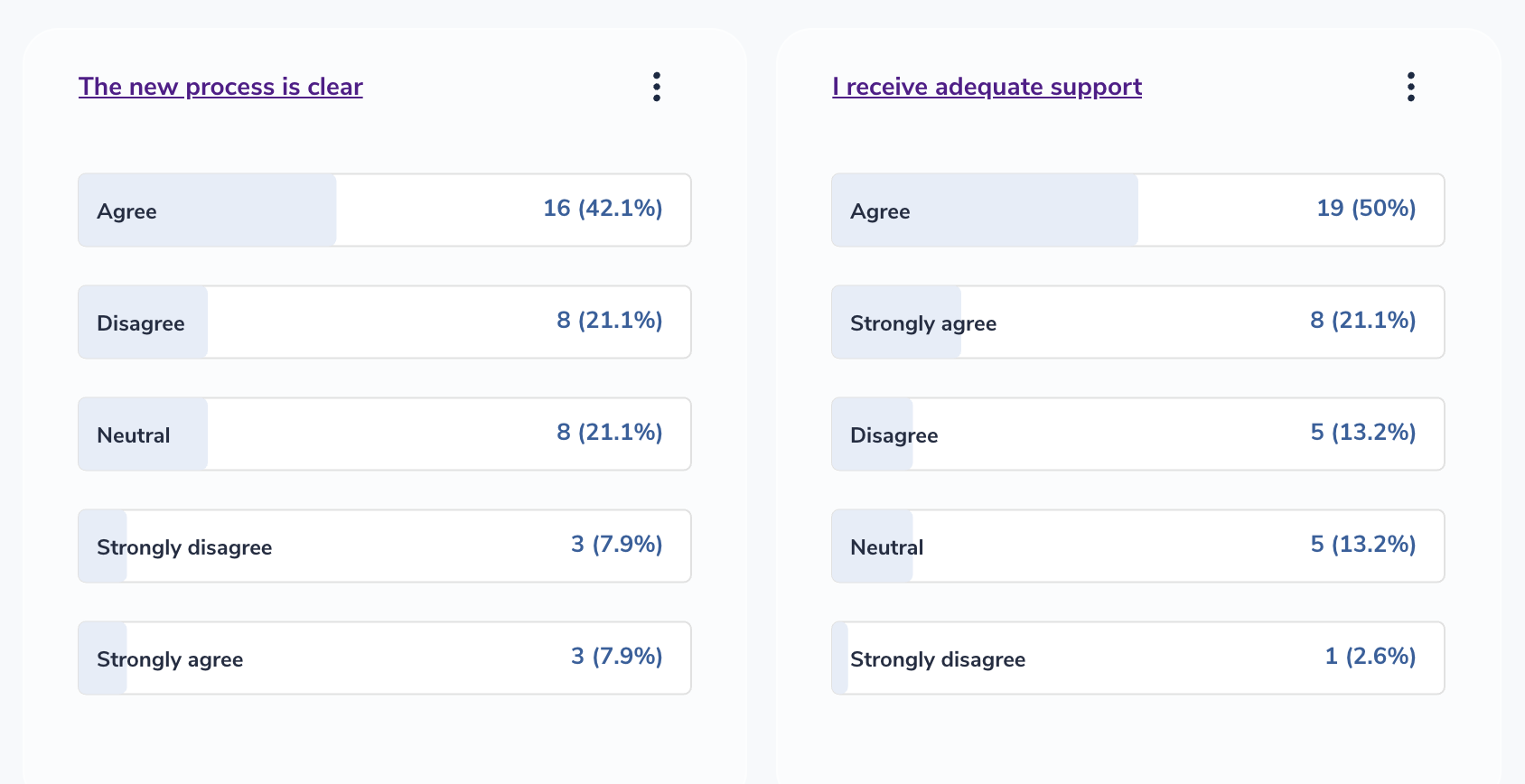
Example above: 'The new process is clear' has 50% agreement compared to 'I receive adequate support' which has 71% agreement.
2. Pay attention to neutral
- High neutral responses often indicate:
- Lack of clarity
- Lack of awareness
- Low confidence to respond
- Neutral is not positive - it often signals ambiguity.
3. Compare to strain / risk Indicators
- If psychological safety scores are low and strain is high → barrier to risk reduction.
- If workload scores are low and strain is high → likely job demand issue.
- If leadership clarity is low and frustration themes appear → communication risk.
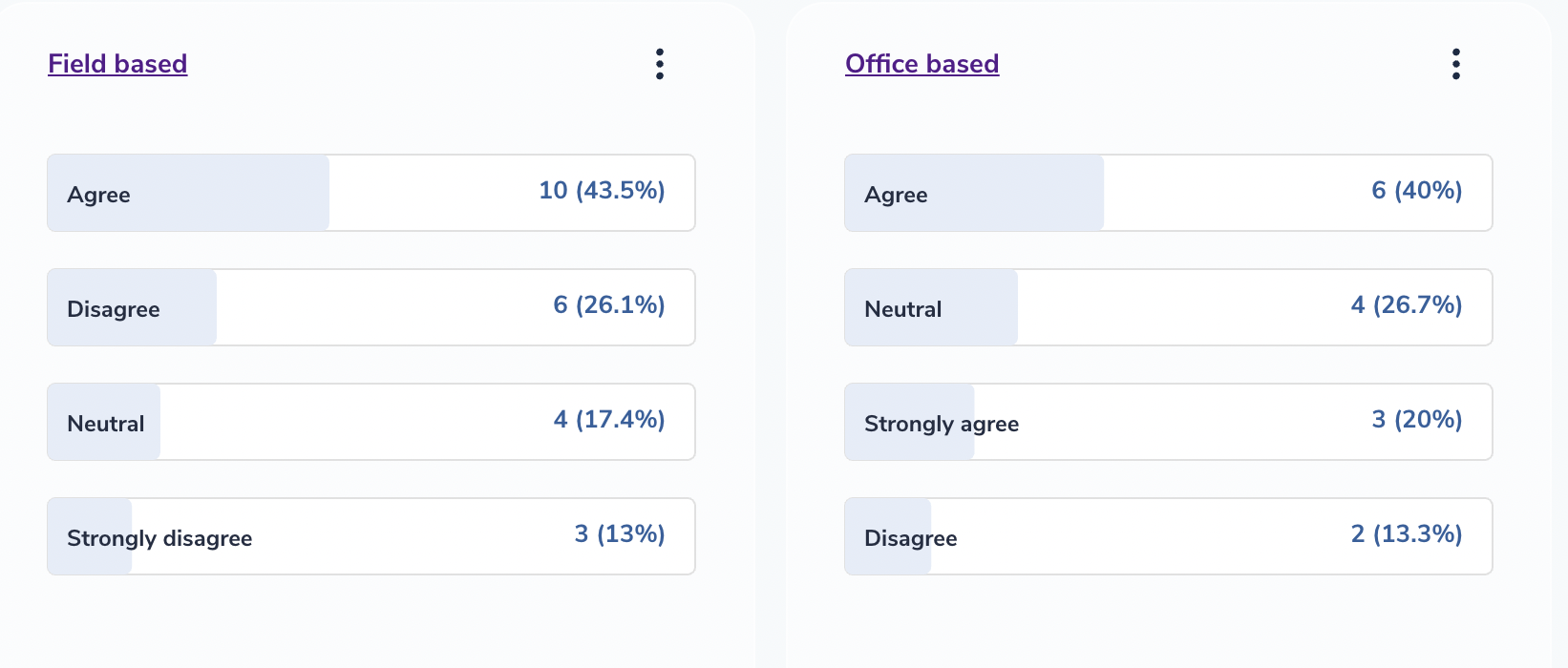
4. Look at variability between groups
- Differences between departments are often more insightful than overall averages.
- One high-risk area can be masked by stronger teams.
5. Track movement over time
- Improvement of 65% agreement to 75% agreement is meaningful.
- Stagnation after intervention suggests controls are ineffective.
- Decline following change indicates implementation risk.
6. Control effectiveness logic
When assessing a new initiative:
- High agreement → control likely working.
- Mixed results → inconsistent implementation.
- Low agreement → control ineffective or poorly communicated.
Always link back to:
What action will this data inform?
If no action is possible, do not ask the question.
How to Create These Questions on Skodel
Getting there
- Login to Skodel
- Click manage organisation on the left hand side bar
- Navigate to question library
Creating the questions
- Click 'create'
- Use 'select one' question type
- Fill in the form like below and click create. You can preview it before using the button on the modal


.png)